
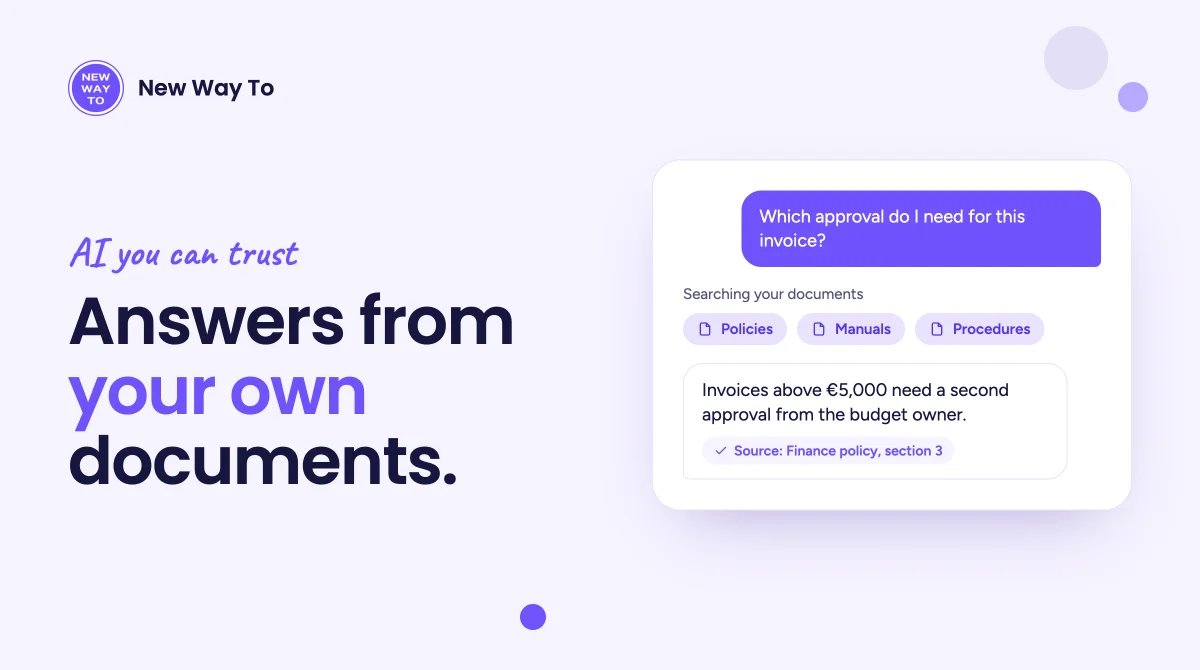
What is RAG, and Why Should You Care?
If you’ve been following the world of AI, you’ve probably heard that large language models (LLMs) like ChatGPT can do incredible things, from drafting reports to answering questions in seconds. But they also have big limitations:
- They don’t always know the latest information.
- They sometimes make things up.
This is where Retrieval-Augmented Generation (RAG) comes in.
So, what is RAG?
Think of RAG as a smarter version of AI. Instead of relying only on what it learned during training, it can also search your own knowledge base (documents, manuals, policies, research papers) and use that information to generate answers.
It’s like having an AI assistant who not only remembers what it studied years ago, but can also run to your company’s library, pull out the right book, and give you an accurate, up-to-date answer.
Why does this matter?
Because businesses don’t just need clever answers. They need reliable, customized answers.
RAG makes this possible. It reduces guesswork, saves time, and builds trust by grounding AI in your actual company data.
What can you do with RAG?
Here are just a few examples of how organizations are using RAG today:
- Customer support: AI chatbots that always answer with company-approved policies.
- Knowledge management: Employees instantly find answers in complex documents.
- Compliance & legal: Teams search regulations and policies with confidence.
- Healthcare & research: Professionals access the latest guidelines and studies in seconds.
If your organization produces a lot of text (and let’s face it, most do), RAG can save time, reduce costs, and improve decision-making.